About MSP Workshop
MSP Workshop
VASAB Expert and Stakeholder Workshop
on Maritime Spatial Planning Challenges in the Baltic Sea,
Vilnius,15 October 2009
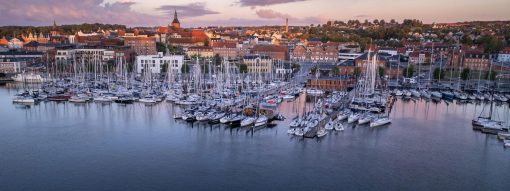
For centuries the Baltic Sea has served the nations living on coasts as a convenient trade route and provider of sustenance. Baltic Sea has been and remains to be key factor that forms political, cultural, environmental and economic identity of the Baltic Sea Region. The most prominent cities of the region have grown as ports on the coast of the Baltic Sea or on the waterways immediately connected to the Sea. Many of these cities continue to function as important sea ports serving the ever increasing flows of goods through the Baltic Sea Region.
Developing technological capacity has rendered feasible and economically profitable variety of human activities in the sea that would seem science fiction just few decades ago. The global-scale the use of sea space, especially that of the continental shelf, has intensified and diversified manifold. In several shelf seas, the economic claims for the marine space exceed their respective surface area several times. Since the last decades of 20th century experts and stakeholders have been calling for Marine Spatial Planning (MSP) and adoption of harmonized principles of MSP that would allow avoiding conflicts, respect multitude of interests, is politically fair, economically prudent and environmentally responsible.
The importance of MSP as a key instrument for an Integrated Maritime Policy for the EU was highlighted by DG MARE in the Roadmap for MSP: Achieving Common Principles in the EU (EC, November, 2008).
Planning of the Baltic Sea Space has been considered by the VASAB Sixth Ministerial Conference (Gdansk, September 2005) as one of the decisive factors shaping future development of the Baltic Sea Region space till 2030. MSP is the part of Long Term Perspective for the spatial development of the Baltic Sea Region prepared for the VASAB Seventh Ministerial Conference that will take place on 16 October 2009 in Vilnius, Lithuania. By joining forces with HELCOM and other relevant stakeholders VASAB is willing to develop a common approach for Baltic Sea MSP, prepare and implement demonstration projects for some Baltic Sea areas of severe use conflicts.
The HELCOM Baltic Sea Action Plan (BSAP) of 2007 introduced Maritime Spatial Planning as a process aiming for more coherent management of various human activities taking place in the Baltic Sea. BSAP commits contracting parties to jointly develop by 2010, as well as test, apply and evaluate by 2012, in cooperation with other relevant international bodies, broad-scale, cross-sectorial, MSP principles based on the Ecosystem Approach.
Emerging EU Strategy for the Baltic Sea Region highlights MSP among the horizontal actions that are fundamental to entire strategy, i.e. making the Baltic Sea region environmentally sustainable, prosperous, accessible and attractive, and secure region. Not least, the development of the MSP in the Baltic provides an opportunity for a joint work of the eight EU member states and Russian Federation.
VASAB Expert and Stakeholder Workshop on Maritime Spatial Planning Challenges in the Baltic Sea, Vilnius, on 15 October 2009 will propose further steps towards development of MSP in the Baltic Sea Region in dialogue with experts and stakeholders. It will underline the role of VASAB as promoter and knowledge base of MSP in the Region. Outcome of the workshop will be reported to the VASAB Ministerial Conference, on the next day, 16 October, 2009.
Participants of the Workshop will discuss among others the following issues:
- What is Maritime Spatial Planning in comparison with terrestrial spatial planning? Are they both as different as usually believed? Which approaches, methods and lessons of the terrestrial planning are to be taken along with developing the MSP?
- Where we are with development of the legislative basis of MSP in the Baltic? What would be the priority tasks and optimal timeline to build such basis?
- Which the most urgent knowledge needs is with regard to the MSP? Which instruments of filling these gaps would be the most useful? How to achieve the most efficient science-policy bridging with regards the MSP?
- How the Baltic MSP development would complement and benefit of the EU process? What would be the European-level added value of this development?
- How to achieve the best synergy between the Baltic MSP and ecosystem approach to management of the sea-related human activities?
PICTURES >>
VIDEO>>
DOCUMENTS>>
PRESENTATIONS >>
PROGRAM >>
VENUE >>